
W. Yuan, R. J. Huang*, J. Duan, J. Guo, W. J. Cao, T. Wang, J. Y. Ren, Y. N. Zhan, and W. Xu (2026), Changes in source-specific health risks of PM2.5-bound trace elements after the residential "coal-to-gas " conversion measure in urban Beijing, Journal of Environmental Sciences, 166, 436-442, doi:10.1016/j.jes.2025.10.019.
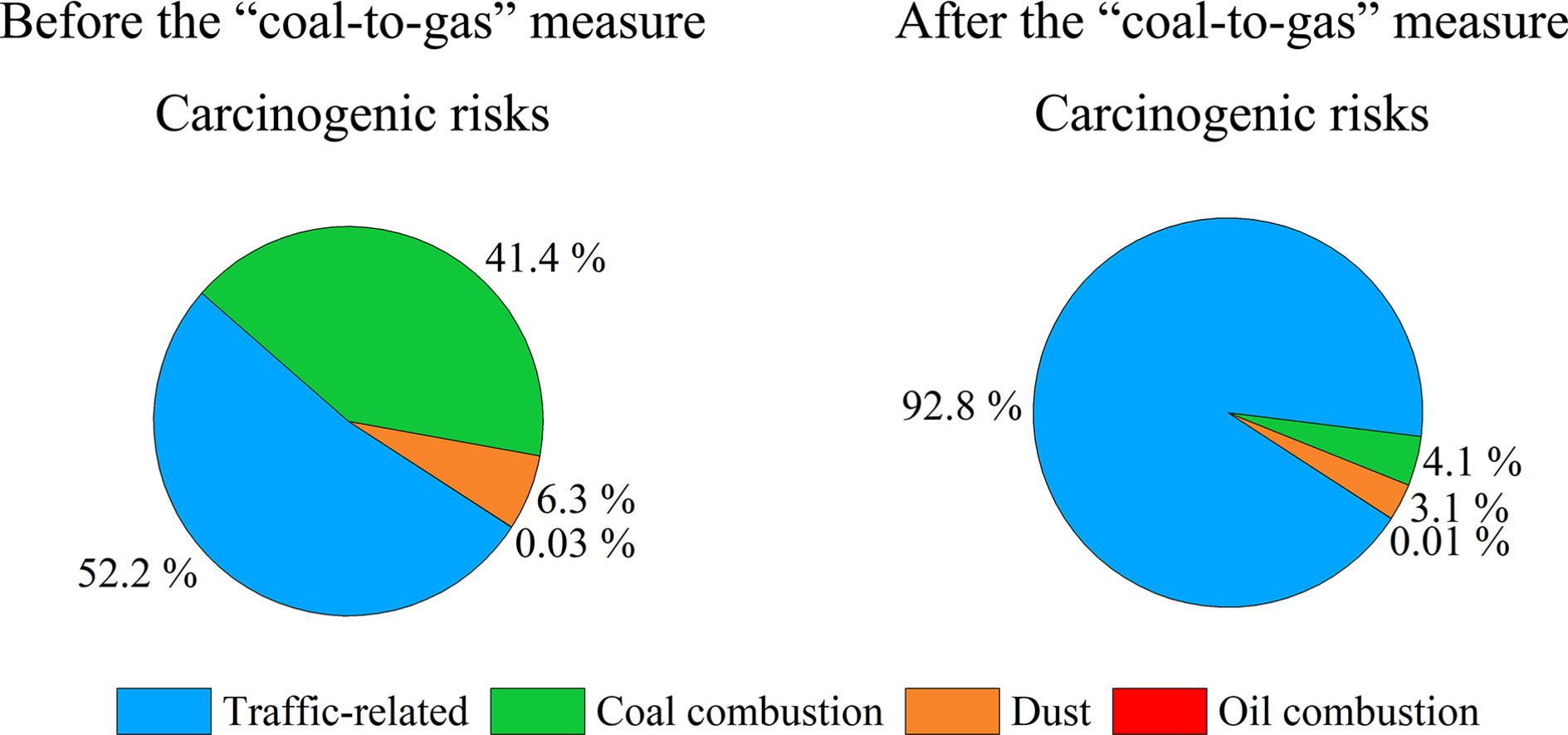
In recent years, the concentration of atmospheric fine particles (PM2.5) in Beijing has been considerably reduced due to the implementation of various air pollution control policies; however, the understanding of how these clean air measures affect the health risks associated with PM2.5-bound trace elements remains limited. In this study, the concentrations and chemical fractionation of 14 trace elements in PM2.5 in Beijing were measured after the "coal-to-gas" conversion measure and compared with those from a previous study conducted before the measure. The results showed that the dominant elements shifted from Fe, Zn, and Pb before the measure to Fe, Ti, and Cu after the measure. Regarding bioavailability, after the measure, the bioavailability of Pb, Zn, Cu, Sr, Ba, and Cr increased by approximately 5%–44%, while that of Cd, Mn, As, Co, V, Fe, Ni, and Ti decreased by about 0.5%–31%, and these changes were mainly attributed to shifts in their emission sources. Source apportionment revealed that after the measure, the relative contribution of traffic-related emissions to the total concentration of the 14 elements increased by 12.1%, whereas the contribution from coal combustion decreased by 17.5%. In terms of carcinogenic risk, traffic-related emissions (92.8%) became the primary contributor after the measure, while before the measure, traffic-related emissions (52.2%) and coal combustion (41.4%) were the dominant sources. This study systematically elucidates the changes in concentrations, chemical fractionation, bioavailability, sources, and health risks of PM2.5-bound trace elements in Beijing before and after the "coal-to-gas" conversion, and suggests that traffic-related emissions should remain a key focus for future air pollution control strategies.